
How to Choose the Perfect Ceramic Dinnerware Set: An Expert Buying Guide
Selecting a ceramic dinnerware set is an investment in your daily dining experience and the overall ambiance of your home.
7/23/20253 min read
How to Choose the Perfect Ceramic Dinnerware Set: An Expert Buying Guide
Introduction
Selecting a ceramic dinnerware set is an investment in your daily dining experience and the overall ambiance of your home. With a myriad of options available, the choice can feel overwhelming. This expert guide cuts through the noise, providing you with the essential knowledge and criteria to evaluate quality, functionality, and style. We'll delve into the key aspects of material composition, safety certifications, and design considerations to empower you to choose a set that is not only beautiful but also durable, practical, and perfectly suited to your lifestyle. Making an informed choice ensures your tableware brings joy for years to come.
A Guide to Key Ceramic Materials and Properties
Not all ceramics are created equal. Understanding the basic materials is the first step to choosing the right set for your needs.
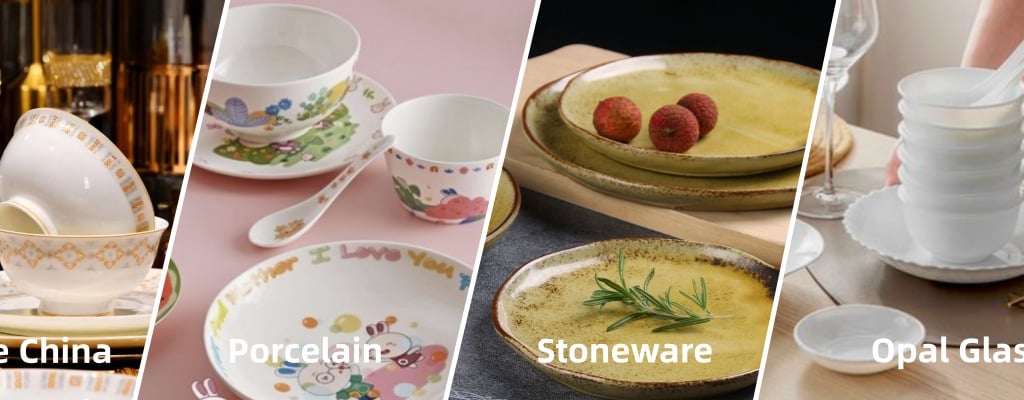
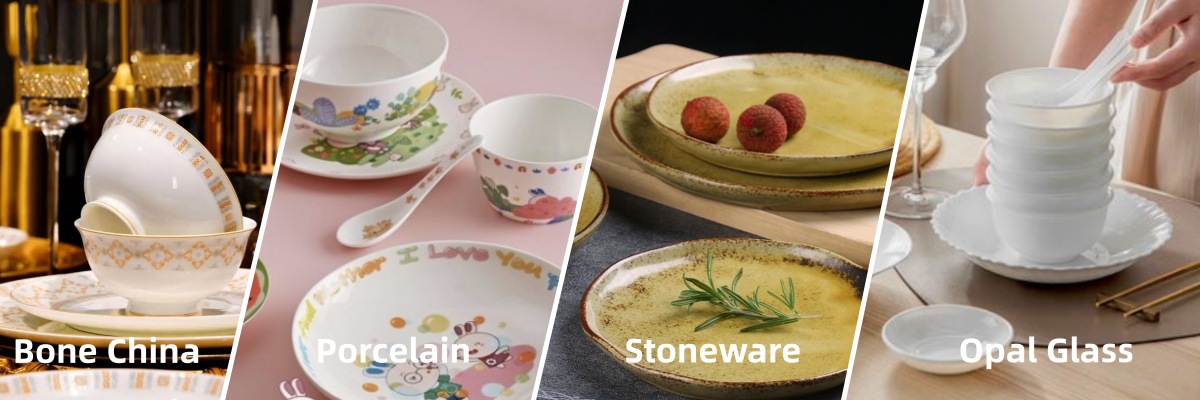
Bone China: Renowned for its exceptional strength, chip resistance, and strikingly delicate, translucent appearance. It's typically lightweight and feels elegant. A premium choice for both everyday use and special occasions.
Porcelain / Fine China: Fired at very high temperatures, making it non-porous, extremely durable, and resistant to staining. It has a pure white, fine-grained surface and is generally heavier than bone china.
Stoneware: A tremendously popular choice for everyday use. It’s durable, chip-resistant, and less porous than earthenware. It has a casual, substantial feel and can come in a variety of finishes, from glossy to matte.
Opal Glass: A sophisticated and elegant choice for modern dining, opal glass is renowned for its exquisite milky white, semi-opaque appearance that diffuses light beautifully. It is exceptionally durable, highly resistant to chipping and scratching, and non-porous, making it inherently hygienic and easy to clean. Unlike traditional ceramics, it has a lighter weight yet maintains a solid, premium feel. Its flawless, uniform surface offers a perfect minimalist backdrop for any cuisine, and it is typically dishwasher, microwave, and oven safe, blending practicality with timeless style.
Pro Tip: When comparing sets, look for the firing temperature (e.g., 1280°C for high-fired ceramics). Higher temperatures generally result in a stronger, more durable product.
Critical Safety and Quality Certifications to Look For
Your family's safety is paramount. Always ensure your tableware meets recognized safety standards.
Lead and Cadmium-Free: Reputable manufacturers will comply with strict international standards regarding heavy metals. Look for explicit mentions like "Lead-Free" and "Cadmium-Free."
FDA/LFGB Compliance: These are crucial safety certifications for food contact materials. FDA (U.S. Food and Drug Administration) and LFGB (German Food and Feed Code) approvals indicate that the products have passed rigorous leaching tests and are deemed safe for use with food.
Microwave and Dishwasher Safety: Check the manufacturer's specifications to ensure the set is safe for use in microwaves and dishwashers. This is not only a matter of convenience but also a testament to the glaze's stability and the body's durability under thermal stress.
Evaluating Craftsmanship: What Defines a Well-Made Plate?
Look beyond the pattern and examine the details that signify quality.
Glaze Uniformity: The glaze should be smooth and even, without thin spots, pinholes, or bubbles.
Finish and Edges: Run your finger along the rim and foot (base) of a plate. They should be smooth and even, not rough or sharp. The foot ring should be ground down smoothly.
Shape and Form: Pieces should be well-formed and symmetrical. Plates should sit flat on a surface without wobbling.
Decoration Type: Understand the difference between underglaze (decoration applied before the glaze, making it extremely durable and dishwash-safe) and overglaze (applied on top of the glaze, which can sometimes be less durable over time).
Conclusion
Choosing the perfect ceramic dinnerware set is a balance of art and science. By prioritizing your lifestyle needs, understanding the materials, verifying critical safety certifications, and appreciating the marks of fine craftsmanship, you can move beyond mere aesthetics. This knowledge allows you to select a collection that offers lasting beauty, unparalleled safety, and daily functionality. A well-chosen set doesn't just hold food; it enhances the entire meal, making every breakfast, lunch, and dinner a more special occasion.
Keywords: how to choose ceramic dinnerware, bone china vs porcelain, dinnerware safety certifications, FDA LFGB safe ceramics, microwave safe dishes, durable ceramic plates, quality ceramic dinnerware sets, lead free dinnerware.